The Physics of Stopping a Bullet: Catching vs. Shattering
Understanding how bulletproof vests work starts with correcting a fundamental misconception. No bulletproof vest is truly "bulletproof." As the Caliber Armor Care and Use Guide states plainly: "there is no such thing as a bulletproof vest." Every piece of body armor — from a soft bulletproof vest to Level IV body armor with rifle plates — is more accurately described as ballistic resistant.
The underlying physics are relatively simple; velocity matters far more than mass. Double a bullet's speed, and its energy quadruples. This is why high-velocity rifle rounds demand body armor with plates rather than soft armor alone.
Ballistic-resistant armor doesn't eliminate energy — it manages where that energy goes.
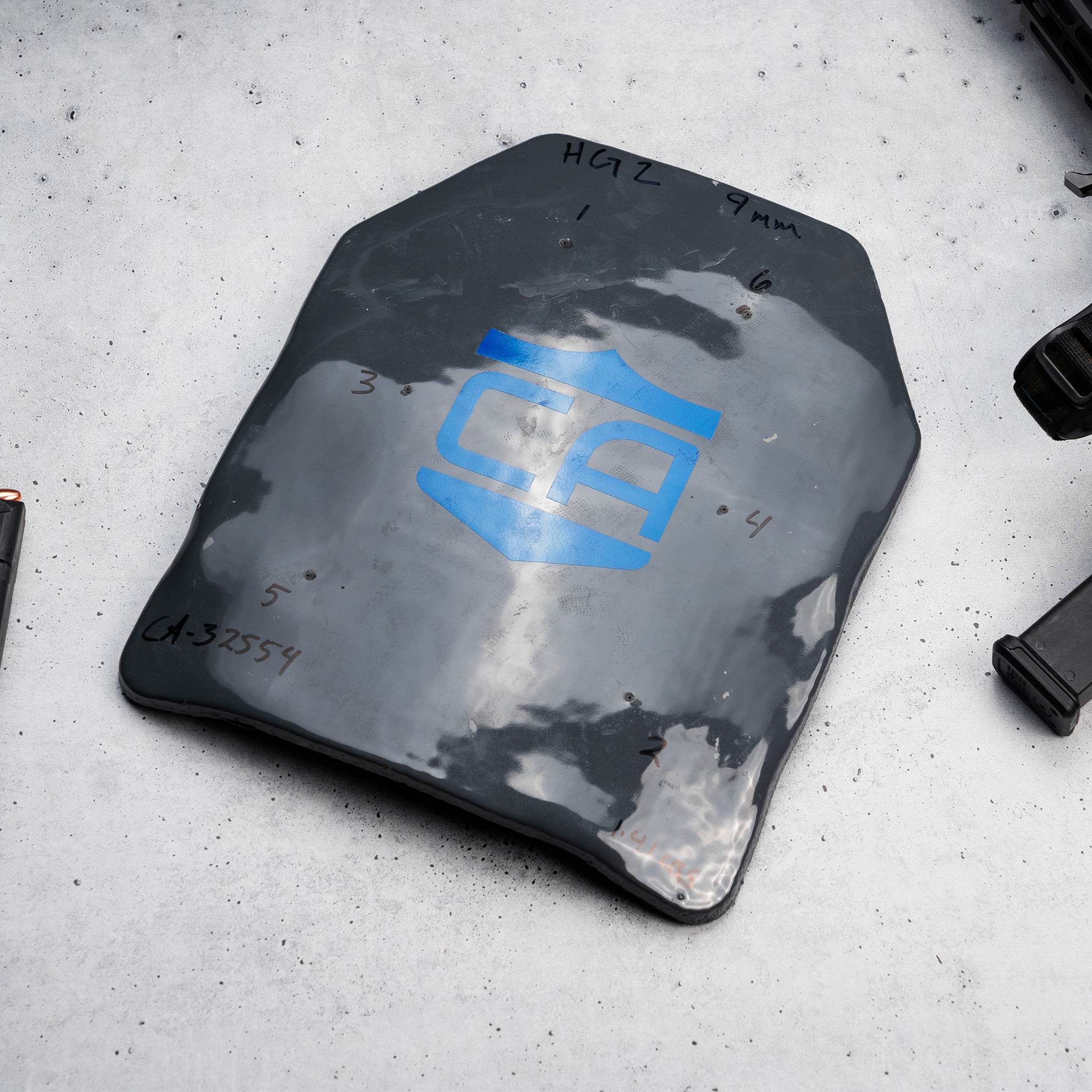
Body armor achieves protection through two distinct mechanisms. Soft armor, found in a standard bulletproof carrier, uses dense high-tensile fiber networks to catch a projectile, distributing its energy across a wide area. Hard armor — ceramic or steel rifle plates inside a tactical plate carrier — shatters or deforms the round on impact, breaking apart its structure before energy transfer occurs.
Both approaches share one critical mandate: energy distribution. Understanding what materials make that possible requires a closer look at the layers inside.
Inside the Layers: What Are Bulletproof Vests Made Of?
So what are bulletproof vests made of? The answer depends on the threat level you're designing for — and the materials engineers choose make all the difference between a round being stopped and one passing through. Modern body armor isn't a single material. It's a precisely engineered stack of layers, each contributing a specific mechanical role.
Here's a breakdown of the primary materials you'll find inside today's armor:
-
Aramid Fibers (Kevlar/Twaron)
-
How they work: When a projectile strikes aramid fibers, the layers tighten and stretch, slowing the bullet and deforming it into a mushroom shape. Think of it as a dense web that catches rather than shatters.
-
Pros: Flexible, proven track record, cost-effective for soft armor
-
Cons: Degrades with moisture and UV exposure over time; not rated for rifle threats alone
-
-
Ultra-High-Molecular-Weight Polyethylene (UHMWPE / Polyethylene)
-
How it works: Tightly bonded polymer chains distribute energy across an enormous surface area.
-
Pros: Pound-for-pound stronger than steel, significantly lighter than ceramic
-
Cons: Higher cost; can have heat sensitivity limitations
-
-
Ceramic and Steel (Hard Plates)
-
How they work: Hard materials fracture or deflect high-velocity rifle rounds on impact.
-
Pros: Essential for stopping rifle-caliber threats; ceramic excels at shattering projectiles
-
Cons: Heavy, rigid, and ceramic plates can lose effectiveness after taking a hit
-
The real protection comes from layering. Manufacturers stack these materials in a deliberate sequence — each layer absorbs a portion of the round's kinetic energy, while friction between layers bleeds off velocity before the projectile can fully penetrate.
Stacking isn't just addition — it's multiplication. Each layer compounds the energy-absorption effect of the one before it.
Of course, the material choice also determines what threats the armor can actually defeat — which is where the distinction between soft and hard armor becomes critical.

Soft Armor vs. Hard Armor: Choosing Your Protection
Now that we've covered the core bulletproof vest materials, it's worth understanding how those materials translate into two distinct categories of protection — because the armor you need depends entirely on the threat you're facing.
Soft armor is the flexible, concealable option most people picture when they think of a bulletproof vest. Built from woven or laminated fiber layers like Kevlar or UHMWPE, it's designed to stop handgun rounds. NIJ Level II and IIIA ratings cover threats ranging from 9mm to .44 Magnum. It's lightweight, can be worn discreetly under clothing, and it's the standard choice for law enforcement officers on routine patrol.
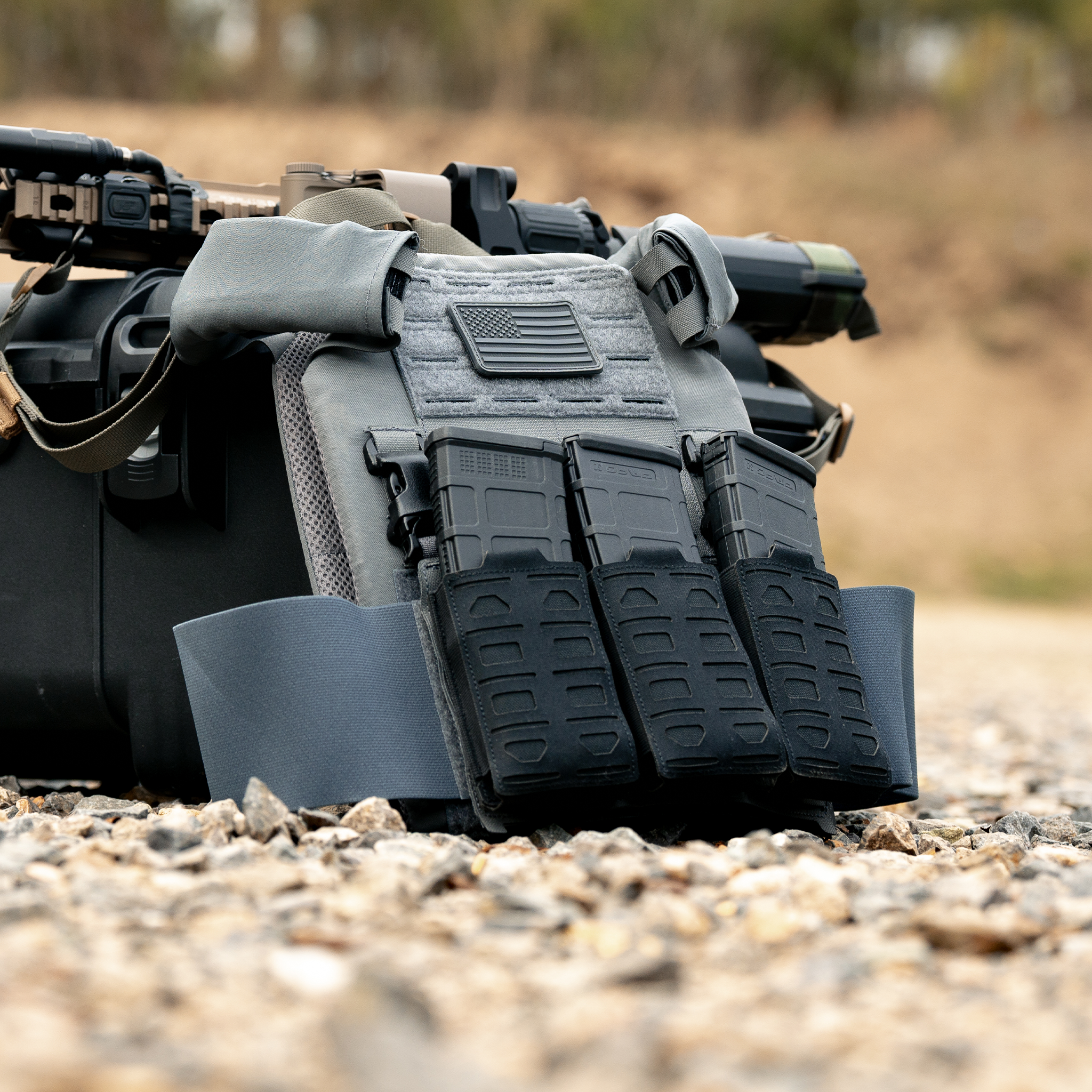
Hard armor is an entirely different category. These are rigid rifle plates — typically ceramic, steel, polyethylene, or a combination of both ceramic and polyethene — inserted into a tactical plate carrier or bulletproof carrier. They're engineered for high-velocity rifle threats at NIJ Level III and Level IV body armor ratings.
The mechanism behind ceramic plates is particularly effective. Hard armor uses a "destruct and absorb" approach: the ceramic layer shatters the incoming projectile on impact, stripping away its energy, while a composite backing catches the fragmented remains.
|
Armor Type |
Threat Level |
Material |
Best For |
|---|---|---|---|
|
Soft Armor |
NIJ Level II / IIIA |
Aramid, UHMWPE |
Handgun threats, concealed daily wear |
|
Body armor with plates |
NIJ Level III / IV |
Ceramic, Steel, Polyethylene |
Rifle threats, tactical operations |
The trade-off is straightforward: more protection means more weight. NIJ certified body armor plates can add 6–15 lbs depending on configuration. Stopping a bullet is only part of the equation, though — what happens to your body after the hit is a story worth understanding on its own.
The Hidden Danger: Understanding Backface Signature and Blunt Force
Understanding how bulletproof clothing functions means confronting an uncomfortable truth: stopping a bullet from penetrating is only half the equation. The energy that bullet carries doesn't just disappear — it transfers directly into the armor and, by extension, into the wearer's body.
That's where backface signature (BFS) becomes critical. BFS refers to the deformation on the rear surface of body armor when a round impacts it — essentially the dent left behind. Even when a bullet doesn't penetrate, the vest deforms inward, delivering a concentrated blunt-force blow to the torso.
According to the National Institute of Standards and Technology (NIST), NIJ certified body armor must limit backface deformation to no more than 44 millimeters (1.73 inches) to pass certification — a threshold designed to reduce the risk of lethal internal trauma.
That 44mm limit isn't arbitrary. Excessive backface deformation can still result in significant blunt-force injuries, including bruising, fractured ribs, and internal trauma. Trauma pads — worn between the armor panel and the body — help absorb and distribute that residual energy, further reducing blunt-force injury risk.
Without NIJ Testing Standards, there is no independent verification of ballistic performance or backface deformation limits. A vest without proper NIJ testing may stop penetration but still deliver a fatal blunt-force blow.
This blunt-force reality leads naturally to another under-appreciated gap in armor protection — the difference between stopping a bullet and stopping a blade.
Stab-Proof vs. Bulletproof: Why One Doesn't Always Do Both
One of the most persistent misconceptions about body armor is that a bulletproof vest automatically protects against knives. It doesn't — and understanding why comes down to basic physics.
Q: If a vest stops a bullet, why can't it stop a blade? A: A bullet strikes with massive blunt force spread across its tip, allowing the woven fibers to catch and deform it. A knife concentrates force onto an incredibly fine edge, which can simply part the fibers rather than engage them.
Q: How do Kevlar vests work against pointed threats? A: They don't — not reliably. Aramid fibers are extraordinarily strong under tension, but a sharp blade slides between the weave rather than loading the fibers across their strongest axis.
The material differences break down like this:
-
Bullets deform and spread energy across multiple fiber layers simultaneously
-
Blades exploit gaps in the weave, bypassing the fiber network entirely
-
Stab-resistant panels use tighter, laminated weaves specifically engineered to resist penetration by points
This is why the NIJ maintains separate standards — NIJ 0101.06 for ballistic resistance and NIJ 0115.00 for edged-blade and spike threats. Multi-threat armor combining both certifications exists, but it's heavier and more specialized. According to the National Institute of Justice, ballistic-resistant soft body armor has saved more than 3,000 police officers' lives over three decades — yet officers facing edged weapons need purpose-built protection, not just a standard bulletproof vest.
Choosing the right NIJ certified body armor for your threat environment matters as much as the armor itself — which is just one of several real-world considerations worth examining closely.
Maintaining Your Armor's Protective Life
How you maintain your body armor when it’s not in use matters more than you think.
Learn more about body armor expiration and proper maintenance in our blog “How Long Does Body Armor Last? Body Armor Lifespan And When to Replace It”
Conclusion: Choosing Armor You Can Trust
From the layered fibers that absorb kinetic energy to the ceramic strike faces that shatter rifle rounds, the science behind a bulletproof vest is genuinely remarkable — but that science only holds when the armor is built to verified standards. Materials, energy distribution, and backface signature (BFS) deformation aren't abstract concepts; they're the measurable difference between protection and false confidence.
That distinction matters most when evaluating unbranded or non-certified plates. Body armor without independent testing offers no reliable baseline — no confirmed BFS limits, no verified stopping power, no accountability. The risks aren't theoretical.
NIJ certified body armor eliminates that uncertainty. Every piece of Level IV body armor, every tactical plate carrier, every plate and carrier combination that meets NIJ standards has been independently validated under controlled, repeatable conditions. That certification is the minimum credible standard — not a premium feature.
At Caliber Armor, the commitment to premium, NIJ certified body armor reflects a straightforward principle: protection you can't verify isn't protection at all.
As Caliber Armor puts it — be prepared for anything. Start by choosing armor that's built to make that possible.
Key Takeaways
-
No body armor is truly “bulletproof” — modern armor is more accurately described as ballistic resistant
-
Soft armor works by catching and dispersing handgun-round energy across layered fibers
-
Hard armor plates break apart or deform high-velocity rifle rounds before energy reaches the body
-
Different armor materials offer different tradeoffs between weight, flexibility, durability, and protection level
-
NIJ ratings determine which threats armor is designed to stop
-
Even when armor prevents penetration, blunt-force trauma and backface deformation can still cause injury
-
Stab-resistant armor and ballistic armor are engineered for different threat types
-
NIJ certification is critical for verifying ballistic performance and safety standards
-
Proper storage and maintenance help extend the lifespan of body armor systems
-
Choosing the right armor depends on your threat environment, comfort needs, and intended use