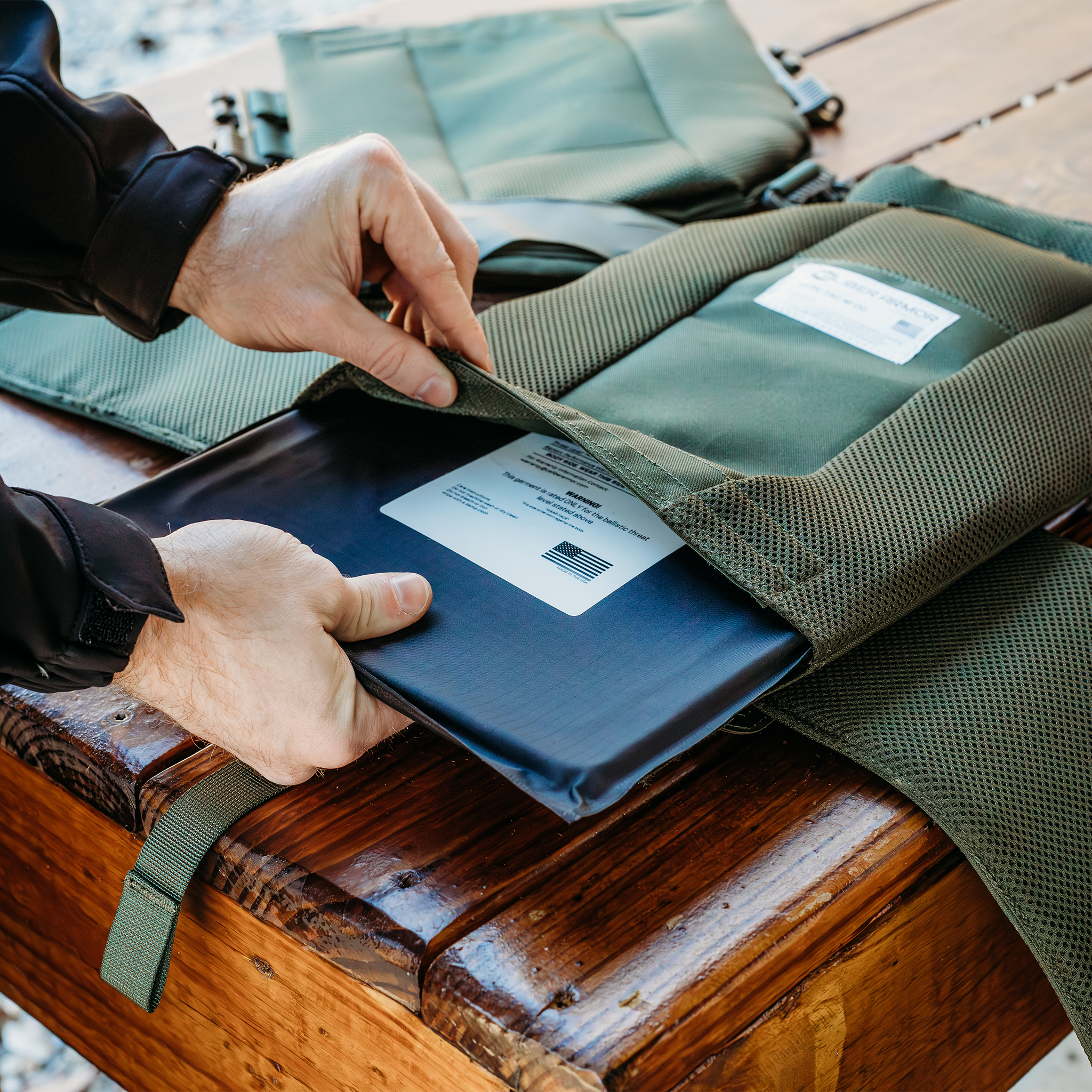
Modern body armor has evolved far beyond the bulky systems many people still picture today. Advances in ballistic materials have made it possible to reduce armor weight while maintaining the protection levels required for law enforcement, military, preparedness, and tactical applications.
Understanding how modern materials like UHMWPE, ceramic composites, and aramid fibers work can help explain why lightweight armor systems have become increasingly popular for users who prioritize mobility, endurance, and long-term wearability.
How Excess Armor Weight Affects Mobility and Endurance
Heavy body armor can reduce mobility, increase fatigue, and impact physical performance during extended wear.
The performance cost is measurable. Research published in the Journal of Bodywork and Movement Therapies found that law enforcement officers wearing heavy body armor and duty gear experience a 13% to 42% decrease in performance during mobility tasks.
-
Heart rate and perceived exertion: Excess weight drives up cardiovascular load during dynamic movement, compromising decision-making and trigger discipline precisely when precision matters most.
-
Situational awareness and fine motor skills: Fatigue from carrying heavy gear degrades peripheral awareness and the fine motor control needed for accurate shooting or equipment manipulation.
-
Vehicle exiting and sprinting: These two tasks show the steepest performance drop-offs, as both demand explosive, coordinated movement that heavy plates actively suppress.
Understanding why this matters requires a closer look at how ballistic materials have evolved — from heavy steel to advanced composites like UHMWPE armor — and why the right plate and carrier combination changes everything.
The Evolution of Modern Ballistic Materials
Bulletproof vest materials have undergone a fundamental shift — from brute-force mass to precision-engineered molecular science — and that shift is what's driving today's lighter, more capable body armor.
Steel plates dominated early ballistic protection for one simple reason: it worked. Steel plates remain a durable and cost-effective option for certain applications, though many users now prefer lighter composite materials for improved mobility and reduced fatigue during extended wear.
The Aramid era changed soft armor entirely. Kevlar and similar woven aramid fibers made the bulletproof vest a practical daily-wear option for law enforcement, absorbing ballistic energy through fiber deformation rather than mass.
UHMWPE (Ultra-High Molecular Weight Polyethylene) offers one of the best strength-to-weight ratios in modern ballistic protection systems. UHMWPE materials can reduce the weight of a complete body armor system by up to 45% compared to first-generation solutions.
Understanding why UHMWPE outperforms at the molecular level, though, requires a closer look at how its unique structure actually stops high-velocity rounds.
Understanding Mass vs Weight in Body Armor
In everyday conversation, people often use “mass” and “weight” interchangeably, but they are technically different concepts.
Mass refers to the amount of matter an object contains, while weight refers to the force gravity applies to that mass. In practical terms, body armor users are usually concerned with weight — how heavy the armor feels during movement, prolonged wear, or dynamic situations.
Modern ballistic materials like UHMWPE help reduce overall armor weight without compromising ballistic performance. This improved strength-to-weight ratio allows users to maintain better mobility, endurance, and comfort during extended wear.
UHMWPE vs. Aramid: Understanding the Strength-to-Weight Ratio
Two synthetic fibers dominate modern body armor construction — and understanding how they differ explains why today's tactical plate carrier can weigh a fraction of what older gear did.
UHMWPE's molecular advantage is foundational. Understanding how body armor is made starts at the molecular level. Ultra-High-Molecular-Weight Polyethylene features extraordinarily long polymer chains — chains that are highly aligned and tightly bonded. This structure gives UHMWPE an exceptional ability to absorb and redistribute kinetic energy across a wide surface area.
Aramid (think Kevlar-class fibers) remains a proven, widely used option — but it carries notable trade-offs:
-
Moisture sensitivity: Aramid fibers degrade when exposed to prolonged humidity, reducing long-term ballistic performance
-
UV vulnerability: Sunlight accelerates fiber breakdown over time
-
Weight-to-thickness ratio: Achieving comparable protection requires more material mass
UHMWPE, by contrast, is chemically inert, moisture-resistant, and UV-stable — making it more durable across demanding field conditions.
On the "strongest material" question: neither fiber alone stops high-velocity rifle threats. That requires body armor with plates — typically composite designs pairing hard strike faces with UHMWPE backing. How those layered constructions actually intercept and neutralize a round is where the real engineering story begins.
How Modern Armor Maintains Protection Without the Bulk
Lightweight body armor materials aren't a compromise — they're the result of precise engineering that channels physics to do the heavy lifting instead of mass.
Layered construction is the foundation of modern UHMWPE and composite armor systems. These plates are built from multiple stacked Uni-Directional (UD) plies designed to work together during an impact event. When a projectile strikes the plate, the cross-ply structure helps disperse and manage energy across a much larger surface area rather than allowing the force to remain concentrated at the initial point of contact. As the projectile interacts with successive layers, the material system progressively slows, disrupts, and captures the threat through controlled energy absorption and load distribution.
Energy dispersion explains why this works. Kinetic energy transfers into the plate as both heat and controlled deformation. The fibers stretch, the matrix deforms, and the bullet decelerates across milliseconds. Multi-layered composite systems consistently outperform single-material designs in managed energy transfer.
In composite plates, a ceramic strike face adds a critical first stage: it fractures and erodes hardened projectile cores — particularly rifle rounds — before the UD backing layers absorb residual energy.
Here's what makes each layer earn its place:
-
Outer ceramic layer — shatters hardened cores on contact
-
UD UHMWPE plies — catch and decelerate fragmented projectiles
-
Backer material — manages backface deformation and blunt trauma
NIJ certified body armor — whether it weighs 3 lbs or 8 lbs — must pass identical NIJ 0101.06 (and emerging 0123.00) ballistic performance standards. Lighter doesn't mean lesser.
Modern UHMWPE plates can weigh significantly less than traditional steel plates while still meeting the same NIJ certification standards.
|
Material |
Typical Weight |
Advantages |
Considerations |
|---|---|---|---|
|
Steel |
Moderate to heavier weight profile |
Durable, affordable, long service life |
Less flexibility and mobility during extended wear |
|
Ceramic |
Moderate |
Strong rifle protection |
Can be more sensitive to cracking after significant impacts |
|
UHMWPE |
Lightweight |
Excellent strength-to-weight ratio |
Higher cost and temperature limitations in some environments |
|
Aramid |
Lightweight/flexible |
Ideal for soft armor |
Less common in hard rifle plates |

Investing in Your Agility: The Caliber Armor Advantage
Your armor should protect you from the threat — not hinder your response to it. That's the core principle driving every product in the Caliber Armor lineup, from lightweight ballistic plates to full tactical plate carrier systems and ballistic shield options.
The right NIJ certified body armor doesn't force you to choose between protection and performance. Caliber Armor's focus on high-performance, independently certified materials means every plate and carrier combination meets rigorous threat standards without adding unnecessary pounds to your loadout.
In practice, fatigue accumulates faster than most operators anticipate, and a heavier bulletproof vest or Level IV body armor system compounds that deficit over hours of sustained activity. Caliber Armor's commitment to the "Be Prepared for Anything" standard means engineering weight out of the equation wherever materials science allows — without softening the protection level.
Whether you're evaluating a rifle plates upgrade, a tactical plate carrier for extended patrol, or a ballistic shield for high-risk entry scenarios, the goal remains the same: keep you moving, keep you protected.
Explore Caliber Armor's full collection of body armor and tactical plate carriers to find the configuration built for your mission.
For a deeper dive on finding the perfect plate carrier fit, check out our body armor buyers guide.
Key Takeaways: Modern Ballistic Materials and Armor Weight
-
Modern ballistic materials like UHMWPE and ceramic composites help reduce armor weight without sacrificing certified protection levels.
-
Lightweight body armor can improve mobility, endurance, and comfort during extended wear and dynamic movement.
-
Different armor materials serve different purposes, with steel, ceramic, UHMWPE, and aramid each offering unique advantages and tradeoffs.
-
NIJ certification matters more than weight alone when evaluating armor performance and protection levels.
-
Choosing the right body armor setup depends on your intended use, mobility needs, protection requirements, and long-term wear considerations.
-
Advances in ballistic engineering continue to improve the balance between protection, durability, and real-world usability.
Frequently Asked Questions About Modern Ballistic Materials
What is UHMWPE?
UHMWPE stands for Ultra-High Molecular Weight Polyethylene, a lightweight ballistic material commonly used in modern body armor and rifle plates. It is known for its exceptional strength-to-weight ratio, allowing armor systems to reduce weight while maintaining high levels of ballistic protection.
Is lightweight body armor still effective?
Yes. Modern lightweight body armor can provide the same NIJ-certified protection levels as heavier armor systems when designed and tested properly. Advances in composite materials, ceramic strike faces, and UHMWPE technology allow manufacturers to reduce weight without sacrificing ballistic performance.
Are steel plates outdated?
Steel armor plates continue to serve an important role due to their durability, cost-effectiveness, and long service life. While many users today gravitate toward ceramic and UHMWPE armor systems for their lighter weight and enhanced comfort, steel remains a proven option for applications where ruggedness, training use, and long-term durability are priorities.
Why does armor weight matter?
Armor weight directly impacts mobility, endurance, and overall comfort. Heavier armor systems can increase fatigue and restrict movement during prolonged wear, while lightweight armor may improve agility, comfort, and long-term usability in dynamic situations.
What is the lightest body armor material?
UHMWPE is widely considered one of the lightest ballistic materials used in modern hard armor systems. It offers an excellent strength-to-weight ratio and is commonly used in lightweight rifle plates and advanced body armor configurations.
Does lighter armor reduce protection?
Not necessarily. Modern lightweight armor systems can meet the same NIJ protection standards as heavier armor when built with advanced ballistic materials and proper engineering. Protection level depends on certification, construction, and intended threat rating — not simply weight alone.
What is the difference between ceramic and UHMWPE armor?
Ceramic armor uses a hard strike face to break apart incoming projectiles, while UHMWPE armor relies on ultra-strong synthetic fibers to absorb and disperse ballistic energy. Many modern armor systems combine ceramic and UHMWPE materials to balance protection, weight, and durability.
Why are modern ballistic materials replacing traditional steel armor in some applications?
Modern ballistic materials like ceramic composites and UHMWPE help reduce overall armor weight while maintaining certified protection levels. Many users choose these materials to improve mobility, reduce fatigue, and increase comfort during extended wear.
What should I look for when choosing body armor?
When selecting body armor, consider protection level, weight, comfort, mobility, intended use, and NIJ certification. The best armor setup balances protection and wearability for your specific application, whether for patrol, training, preparedness, or specialized operations.