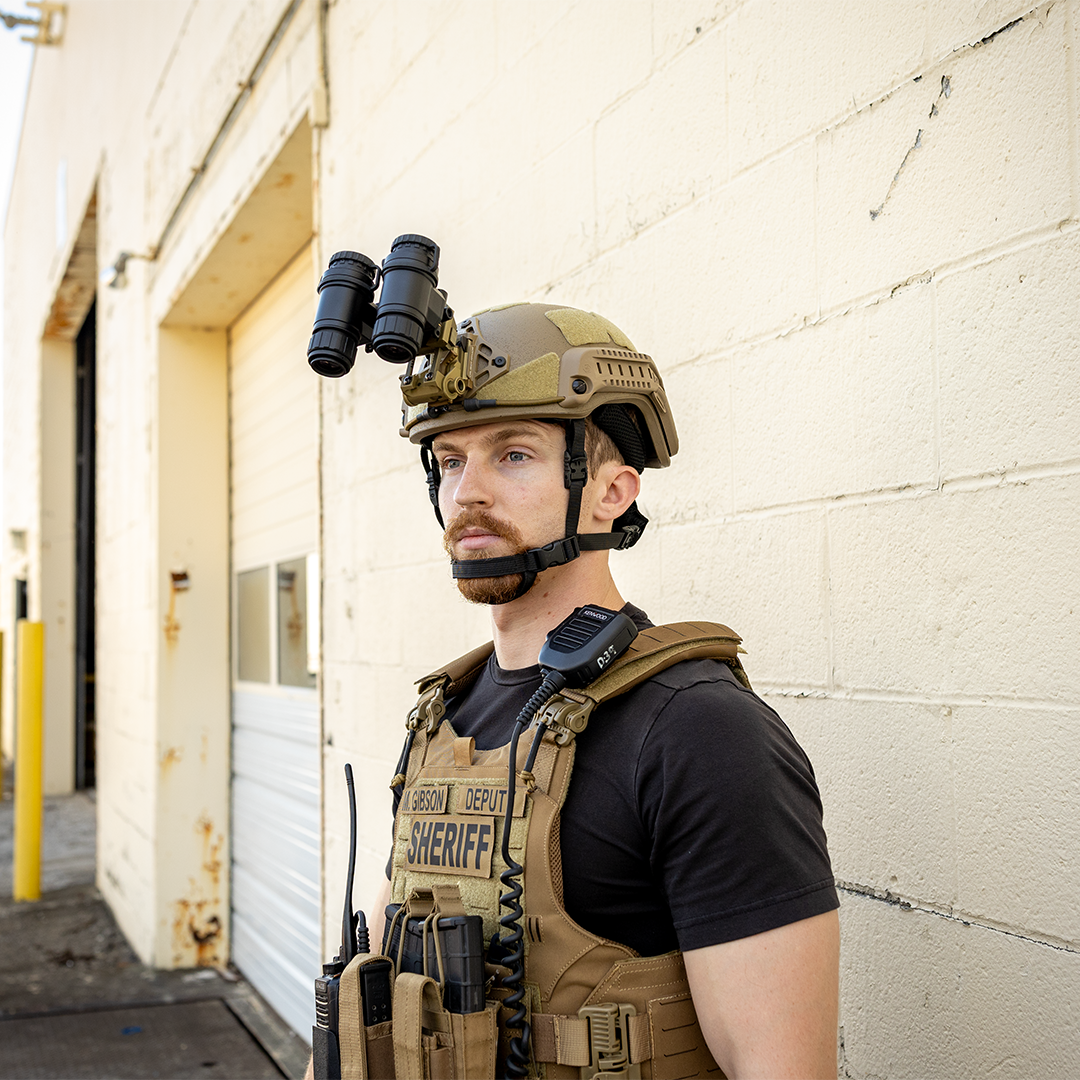
Key Features to Consider When Selecting a Ballistic Helmet
A ballistic helmet can look right on a product page and still be the wrong fit for your setup. Protection claims deserve a close read, but so do shell size, coverage, weight and the equipment you plan to attach.
When beginning to shop for the right ballistic helmet for you, start with your intended use. What threats must the helmet address? How long do you expect to wear it? Will you use hearing protection, communications equipment or night vision? Those answers give you a reason to select each feature, rather than buying hardware you will never use.
Verified Protection and Testing
Before comparing comfort features or accessory mounts, confirm that the helmet's documented protection matches your requirements. A ballistic helmet and a non-ballistic bump helmet can look similar, so verify the exact model and category.
Look for documentation identifying the test method, laboratory, projectile threats and test conditions. A general rating is a starting point; be sure to ask what supports it. NIJ's ballistic certification program covers qualifying law enforcement body armor, not ballistic helmets. Independent testing using an NIJ-related method should not be presented as NIJ helmet certification.
Penetration resistance, fragmentation resistance and impact performance answer different questions. Review the results relevant to your application, including applicable deformation or impact attenuation data. Passing a test does not guarantee an injury-free outcome.
The Caliber Armor NIJ Level IIIA High Cut Ballistic Helmet is independently tested at NIJ-accredited laboratories in the United States using NIJ 0101.07 Level IIIA/HG2 and NIJ 0106.01 testing guidelines and protocols. Its documented testing includes resistance to specified handgun threats, backface deformation measurements, and fragmentation resistance. Reported results include a 17-grain fragmentation V50 of 2,351 ft/s under MIL-STD-662F.
For professional use, your organization's approved equipment and procurement requirements should be part of the decision from the beginning.
Fit and Sizing
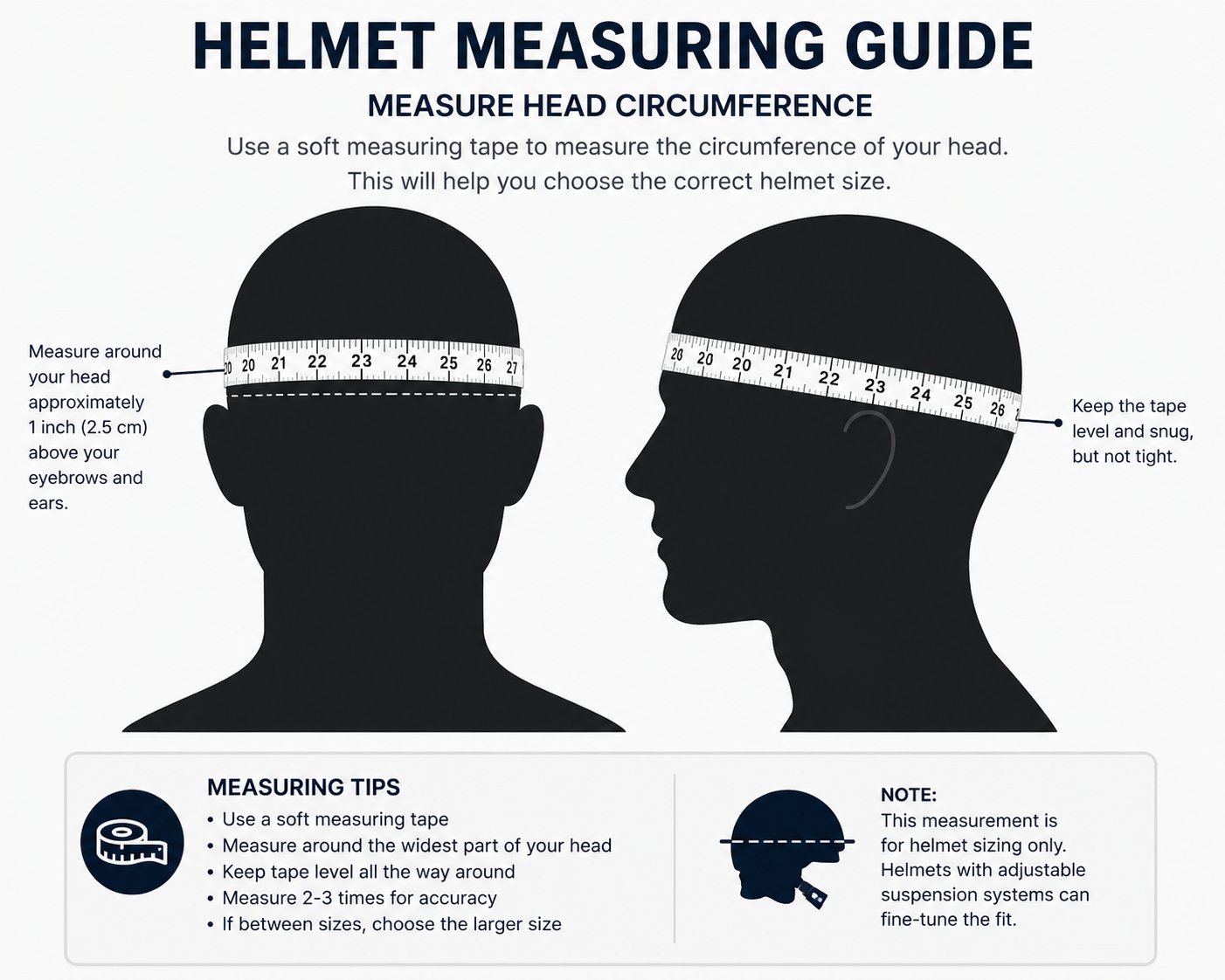
A helmet needs to sit in its intended position and remain stable. Begin with the manufacturer's measurement procedure and size chart for the specific model. Size labels are not universal: a large in one system may fit differently from a large in another.
Head shape matters alongside circumference. Ask what adjustments are available and whether the shell suits your head. A dial can refine fit within the system's intended range; it should not be your plan for making an oversized shell work.
The Caliber Armor High Cut Ballistic Helmet features a dial-adjustable retention system that allows convenient, one-handed fit adjustments. Its chafe-free chin cup lining is designed to improve comfort while maintaining a secure fit. As with any ballistic helmet, selecting the correct shell size is essential before making adjustments to the retention system.
When trying a helmet, assess whether it stays positioned as you look around and move. Check for persistent pressure points, interference with vision and contact with other gear. Use the manufacturer's setup instructions rather than a generic rule about where every helmet should sit.
Try it with the equipment you intend to wear. A comfortable fit without a headset tells you only part of the story.
Shell Cut and Coverage
Full-cut, mid-cut and high-cut designs describe differences in shell coverage, particularly around the ears. Full-cut helmets generally retain more shell in that area. Mid-cut designs remove some of it, while high-cut shells leave more room beside the ears.
That space can help accommodate headsets and mounting adapters, but it comes with a coverage tradeoff. Exact profiles vary between manufacturers, so compare actual shell dimensions and fit rather than assuming that every high-cut helmet is shaped the same way.
A useful comparison starts with two questions: how much coverage does your application call for, and what equipment must fit alongside it? More coverage deserves consideration, but so does whether the helmet works with your required hearing protection and communications setup.
Caliber Armor's High Cut Ballistic Helmet features an ACH-style profile designed to provide clearance around the ears for compatible communications equipment and hearing protection. This configuration supports tactical setups that require integrated headsets and other helmet-mounted equipment while maintaining the ballistic coverage provided by its high-cut shell design.
Within a comparable design, less shell area can reduce weight. Across different models, material, thickness, size and hardware also affect the result. Cut alone is not enough to rank helmets by weight or protection.
Weight and Balance
Check what a quoted weight includes. Shell-only weight and complete system weight are different measurements. Manufacturer specifications may list them separately, with figures tied to a particular size.
Compare equivalent configurations. Then account for the headset, mounting hardware, lights, night vision device and any other equipment you expect to use. A lightweight shell can become a much heavier setup once everything is attached.
Balance deserves attention alongside total weight. Equipment at the front changes how the setup feels; a counterweight may alter that balance but adds mass of its own. Evaluate the loaded helmet rather than assuming that an accessory will solve every comfort issue.
Ask yourself whether each attachment has a purpose. Leaving unnecessary equipment off is a practical way to keep the setup manageable.
Padding and Suspension
The interior system helps establish fit and spacing. Depending on the design, it may include pads, a retention system, a fit band or a combination of components. Ask which adjustments the manufacturer permits and which parts must remain in place.
The Caliber Armor High Cut Ballistic Helmet incorporates a D3O Halo™ 7 impact liner designed for impact management and comfort. According to the product's reported testing, the liner system exceeds applicable ACH blunt-impact requirements under AR/PD 10-02 by 33%. This highlights the importance of evaluating a helmet's interior impact-management system alongside its ballistic shell.
Comfort and impact-management components can serve different functions. Follow the approved configuration instead of removing required padding to make room for other gear.
Before choosing a model, check whether approved replacement components are available. Also ask how the interior should be cleaned and when it should be inspected or replaced. These are useful ownership questions, especially if the helmet will see frequent use.
Retention and Chin Strap Adjustment
The retention system secures the helmet on your head. Look at how it adjusts, where the straps sit and whether the buckle works with the rest of your equipment. Follow the manufacturer's instructions for securing it.
During a fit evaluation, consider whether you can reach the adjustment points and operate the buckle while wearing your usual gloves. Check whether the straps interfere with a headset or other required equipment. These are details worth discovering before you commit to a setup.
A retention system needs to work with the shell and interior components. Tightening a strap harder is not a substitute for choosing the appropriate size.

Hearing Protection and Communications Compatibility
A high-cut shell creates space around the ears, but that does not establish compatibility with every headset. Check the headset, adapter and helmet combination you intend to use.
For rail-mounted equipment, confirm the required attachment interface and whether adapters are included. For headband-style equipment, assess the available space and the approved interior configuration. The goal is a setup that fits without interfering with required helmet components.
Check ear-cup positioning and the intended hearing-protection seal while wearing eye protection. Also consider microphone placement and cable routing. The helmet should work with the equipment you rely on, rather than making each piece harder to use.
Accessory Rails
Rails can provide mounting options for compatible equipment, such as lights or headset adapters. Similar-looking rails are not proof that an attachment will fit. Verify the specific interface and approved hardware before purchasing.
The Loaded Caliber Armor High Cut Ballistic Helmet includes integrated dovetail side rails with a reverse-dovetail mounting interface for compatible accessories, including helmet-mounted lighting and communications equipment. Exterior loop panels also provide attachment points for hook-backed accessories, such as identification patches and compatible battery packs. These features allow users to configure their helmet around their operational equipment needs.
Ask what comes in the box. A helmet shown with a headset or light may be sold without those accessories, and an adapter may be a separate purchase.
Plan attachment positions around access and clearance. Can you reach the controls? Does the equipment interfere when you turn your head? Follow the manufacturer's installation instructions and hardware requirements. A secure mount matters more than filling every available slot.
Night Vision Shrouds and Mounting Hardware
A front shroud provides an attachment interface for compatible mounting equipment. It does not mean the helmet includes a night vision mount or device. Confirm the shroud, mount and device are compatible, and check the manufacturer's guidance for the complete assembly.
Caliber Armor offers two NVG shroud configurations with its loaded ballistic helmet. The standard Caliber Armor Aluminum NVG Shroud features a powder-coated aluminum-alloy construction, while the optional Unity Tactical SUMMIT™ NVG Shroud combines a high-impact polymer body with a machined stainless-steel insert for a compact, lightweight alternative. Both configurations include an NVG shock cord kit with dual hook bungees to help stabilize compatible night vision devices.
If night vision is part of your application, include the mounted device in your fit and balance evaluation. Check clearance and access to the controls in its intended positions.
If you do not plan to use it, avoid making night vision hardware the deciding feature. Choose around the equipment your application actually calls for.
Shell Material and Construction
Aramid and ultra-high-molecular-weight polyethylene, or UHMWPE, are materials used in ballistic helmet construction. Some designs combine materials. UHMWPE composites can support lightweight helmet designs, while aramid also has established use in ballistic shells.
Caliber Armor’s ballistic helmet uses a hybrid shell constructed from multiple layers of UHMWPE and aramid fibers using U.S.-sourced materials. This construction combines both materials within a single ballistic shell designed to meet the helmet's specified protection requirements. As with any helmet, the complete system's documented test results are more meaningful than the materials alone.
The finished helmet is what you are evaluating. A material name alone does not establish threat performance, weight, durability or fit. Compare the documented results and specifications for each model rather than declaring one fiber the best choice for every application.
Review environmental and care guidance, too. Find out what storage conditions, cleaning products and modifications the manufacturer permits. Construction and maintenance should be considered together.
Comfort During Extended Wear
Give a fit evaluation enough time to reveal problems. A helmet that feels fine for a quick try-on may develop pressure points as you wear it longer. Assess the loaded setup, including how it interacts with your carrier when you turn your head or look up.
Consider the conditions in which you expect to work, including heat and moisture. Ask about approved comfort adjustments and cleaning practices. Do not drill ventilation holes or make unapproved changes to the shell or interior.
Comfort is worth evaluating because you need to maintain the intended fit throughout use. If the setup only feels tolerable when you loosen it beyond the manufacturer's guidance, reassess the fit or configuration.
Replacement Parts and Long Term Support
Check availability of approved pads, straps, buckles and mounting components before buying. A helmet is easier to maintain when its instructions and replacement parts are accessible.
Read the warranty and service-life guidance separately. A warranty period is not automatically a replacement deadline, and replacement recommendations can differ between the shell and other components. Follow the model's inspection, care and replacement instructions.
Include necessary adapters and future maintenance in your cost comparison. A lower purchase price is less appealing if you still need several pieces to make the helmet usable for your application.
Consider What's Included in Your Helmet Configuration
When comparing ballistic helmets, consider whether you're purchasing a standalone shell or a more complete system. Some helmets require additional purchases for retention components, accessory rails, NVG shrouds, or other mounting hardware.
The Loaded Caliber Armor High Cut Ballistic Helmet arrives fully assembled with its D3O Halo™ 7 impact liner, dial-adjustable retention system, dovetail side rails, NVG shock cord kit, and your selected shroud. This provides a ready-to-configure platform for adding compatible operational accessories.
Questions to Ask Before You Choose
Use these questions to compare complete setups:
-
Does the exact model have documented performance for the required threats? Is the shell the appropriate size and shape for your head?
-
Does its coverage suit your application and required equipment?
-
What does the quoted weight include, and what will the loaded setup weigh? Are the interior and retention adjustments sufficient for a stable fit? Are your headset, adapters and mounting equipment confirmed compatible?
-
Which components are included, and which cost extra? Are care instructions and approved replacement parts available?
If a specification is unclear, ask the manufacturer before treating it as a feature you can rely on.
Choose a Helmet That Works With Your Setup
Start with verified protection, then evaluate fit, coverage and the equipment you intend to use. The strongest comparison is between complete, usable configurations in the appropriate size.
Take time to check the details before purchasing. Your helmet should fit your application and stay practical through the work you expect to do.