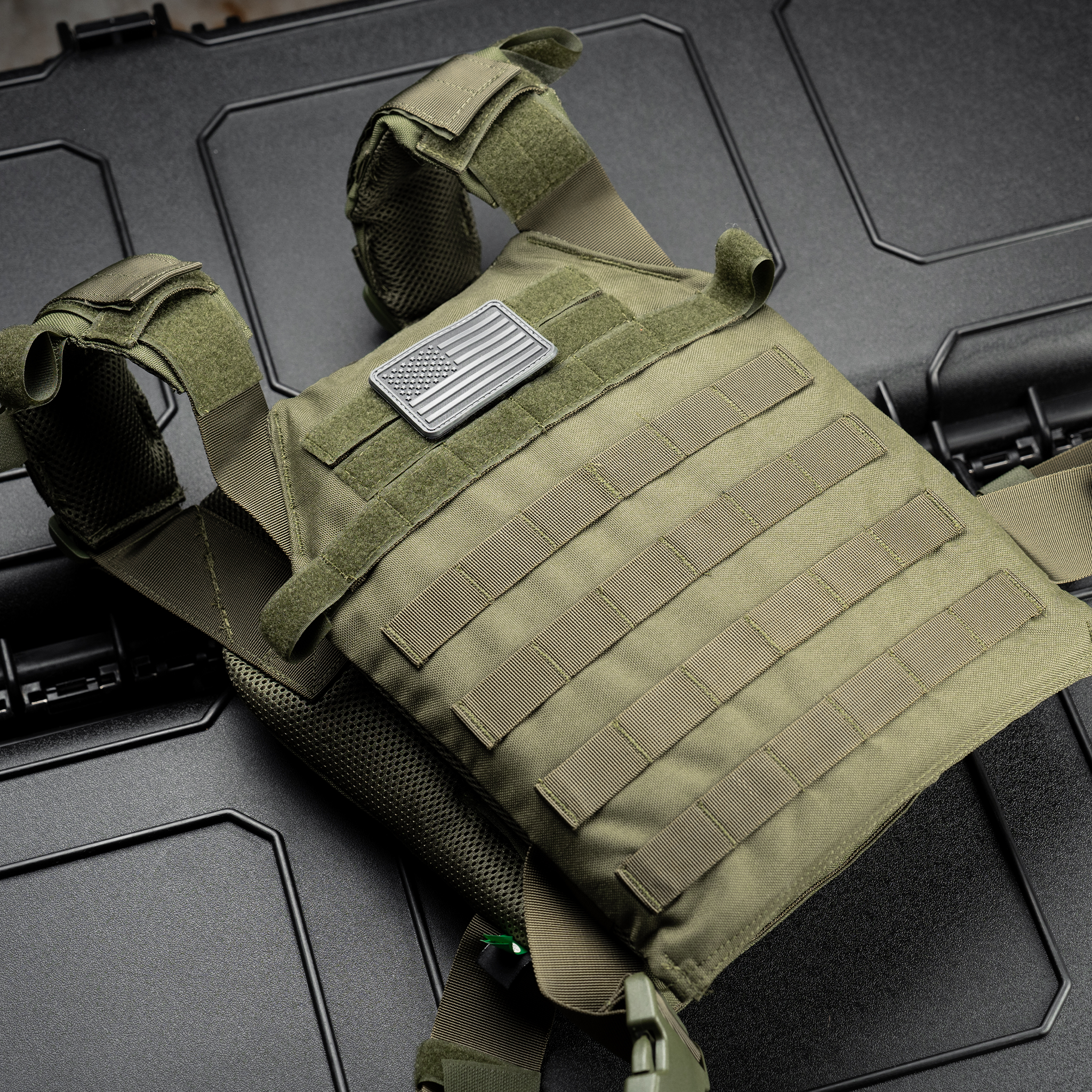
Why Plate Carrier Choice Matters for Hard Armor
Choosing the best plate carrier for hard armor plates isn't simply a purchasing decision — it's a mission-critical commitment. The tactical plate carrier you select directly determines how effectively your body armor performs under real-world conditions, and a poor fit between rifle plates and carrier can compromise protection, mobility, and endurance simultaneously.
Protective performance is determined by the armor itself, but how well that protection works for the wearer depends on how the system is fitted, worn, and supported by the carrier. NIJ-certified plates will stop the threats they are rated for regardless of the carrier — but only a properly sized and adjusted carrier keeps those plates in the correct position on the body when it matters.
The stakes are straightforward: the right plate carrier keeps hard armor correctly positioned. The wrong one doesn't. Understanding the relationship between plate, carrier, and load is where smart protection begins.
The Plate-First Philosophy: Why the Vest is Your Second Purchase
One of the most common mistakes when building a hard armor setup is choosing the carrier first.
In reality, plate carriers are designed to fit the plates — not your body.
That means your plate selection should always come first.
Whether you’re running a standard 10×12 shooter’s cut or a SAPI configuration, your carrier must match those exact dimensions. Even small mismatches can lead to plate movement, reduced coverage, and decreased performance under stress.
It’s helpful to think of your gear as a system rather than individual purchases. Once you add weight from plates, ammunition, and accessories, load distribution becomes a major factor in comfort and mobility.
A poorly matched carrier amplifies these issues, leading to faster fatigue and reduced effectiveness over time.
Choosing your plates first ensures everything that follows is built on a solid foundation.
Plate Compatibility: Getting the Right Fit
Fit isn’t just about comfort — it directly impacts how your armor performs.
A plate carrier that doesn’t properly match your plates in size, shape, or thickness can shift during movement, create coverage gaps, and reduce overall effectiveness. When it comes to hard armor, even small mismatches matter.
Plate carriers are sized to the plates, not your body. That means your plate dimensions should always guide your carrier choice.
Common plate cuts like SAPI and shooter’s cut have different shapes and corner angles. Using the wrong carrier for your plate type can create excess space inside the plate bag, allowing movement under load — something you want to avoid entirely.
Even a half-inch mismatch can affect how securely the plate sits and performs under stress.
Thickness matters too. Higher-rated plates, like Level IV or RF3, are often thicker and require carriers with deeper plate bags to ensure a secure, stable fit.
The bottom line is simple:
Always confirm your plate size, cut, and thickness before choosing a carrier — not after.

Understanding the New Ballistic Landscape: NIJ 0101.07 and Your Carrier
Ballistic standards evolve — and the latest update from the National Institute of Justice (NIJ) changes how you should approach both your plates and the carrier that supports them.
The NIJ 0101.07 standard replaces the familiar Level III and Level IV system with a new RF (Rifle) classification:
-
RF1 / RF2 → previously Level III
-
RF3 → previously Level IV
This isn’t just a name change. Each category introduces more specific testing protocols designed to better reflect real-world rifle threats.
For more in depth dive into the new standards check out this article- Decoding NIJ Standards.
Why This Matters for Your Plate Carrier
The shift to RF ratings directly impacts how you choose a carrier in two key ways:
1. Plate Thickness & Fit
RF3/Level IV plates are typically thicker and denser than RF1 or RF2 options. That added bulk requires a carrier with deeper plate bags to ensure a secure, stable fit.
A carrier that’s too tight can:
-
Prevent proper plate seating
-
Reduce comfort
-
Affect overall performance
2. Plate Carrier Weight Distribution Becomes Critical
As protection levels increase, so does weight, Typically.
Heavier RF3-rated plates place more strain on your shoulders and core, making carrier design more important than ever. Features like reinforced shoulder straps and a supportive cummerbund help distribute that weight evenly and prevent the system from pulling forward during movement.
Female-Specific Armor Considerations
NIJ 0101.07 also introduces formalized testing for female-specific body armor — a significant and long-overdue advancement.
These plates often feature:
-
Shorter height
-
Contoured shaping
Because of this, the carrier must match those dimensions. A standard-cut plate carrier may not provide proper fit, coverage, or comfort when used with female-contoured armor.
As ballistic standards evolve, compatibility between your plates and carrier becomes even more important.
Understanding your plate’s rating, thickness, and shape ensures your carrier supports it properly — so your armor performs exactly as intended.
NIJ Standard Comparison at a Glance:
|
Old Designation |
New Designation |
Typical Threat Level |
|---|---|---|
|
Level III |
RF1 / RF2 |
Rifle rounds (non-AP) |
|
Level IV |
RF3 |
Armor-piercing rifle rounds |
Understanding where your NIJ certified body armor falls in this new framework is step one. Next is understanding that the RF category also has a direct influence on one of the most overlooked carrier considerations — raw weight.
The Physics of Weight: How Plate Material Dictates Carrier Selection
Plate material isn't just a ballistic consideration — it's a structural one. The weight profile of your rifle plates directly shapes what features your tactical plate carrier needs to perform correctly under load. Think of it as a tactical gear tier list where the plate drives the carrier decision, not the other way around.
Steel plates typically weigh 6-8 lbs per , ceramic plates 4–7 lbs, and UHMWPE (ultra-high-molecular-weight polyethylene) plates just 3–5 lbs. That 2–4 lb swing across material types has real consequences for how a carrier must be constructed.
Steel Plates
Steel plates are the heaviest option, and that mass demands a carrier built to handle sustained load. Without structural support, 7–10 lbs of steel will migrate downward during movement, disrupting coverage and fatiguing the wearer.
-
Requires a stiff, reinforced cummerbund to prevent lateral sag
-
Benefits from padded shoulder straps and a rigid plate bag
-
Paired best with a full-featured carrier that prioritizes load management over minimal profile
Ceramic Plates
Ceramic strikes a middle-ground balance between protection and weight. Level IV body armor plates are most commonly ceramic, and their moderate weight allows for more carrier flexibility without sacrificing structural integrity.
-
Works well with a semi-rigid cummerbund
-
Compatible with most standard body armor with plates configurations
-
Padding recommendations remain important for extended wear
Polyethylene (UHMWPE) Plates
Lightweight PE plates open the door to genuinely minimalist builds. Their low weight reduces fatigue and allows slick, low-profile carrier designs without compromising coverage.
-
Pairs naturally with a slick or minimalist tactical plate carrier
-
Flexible cummerbund options are viable
-
Ideal for high-mobility roles where reduced bulk is mission-critical
How that weight sits on your body — and how it's distributed across your frame — matters just as much as the total number on the scale.
Weight Distribution & Comfort
A tactical plate carrier that fits poorly doesn't just feel uncomfortable — it actively degrades performance. Once you've locked in plate material and weight (as covered earlier), how that load sits on your body becomes the next critical variable.
Proper weight distribution matters more than raw weight. A heavier plate and carrier setup that's well-fitted can outperform a lighter system that rides incorrectly. In practice, front-to-back balance is the primary concern — excessive forward weight fatigue the lower back and shoulders faster than almost anything else.
Key fit factors to evaluate:
-
Shoulder strap placement — straps set too wide create hotspots under load
-
Cummerbund tension — snug enough to prevent lateral shifting without restricting breathing
-
Plate height — the top edge should sit approximately one inch below the sternal notch
What typically happens with a poorly sized plate carrier is that plates migrate during movement, creating both comfort issues and coverage gaps that compromise ballistic protection.
Of course, even a well-distributed load generates heat during extended wear — which is exactly where we'll focus next.
Heat, Breathability, and Extended Wear
Ballistic protection always comes with a thermal cost. A tactical plate carrier that fits perfectly and distributes weight well still traps heat — and over hours of extended wear, that heat accumulates. Mesh-backed suspension systems and channeled foam padding are now standard on higher-end designs precisely because airflow matters as much as fit.
Breathability directly affects mission endurance. Carriers with ventilated cummerbunds and standoff channels create a small but meaningful gap between body armor with plates and the torso, allowing convective airflow to reduce core temperature buildup. For law enforcement officers or military personnel wearing NIJ certified body armor through full shifts or extended operations, that difference isn't trivial.
It's worth noting that no carrier eliminates heat stress entirely — it's a limitation built into the physics of hard armor coverage. The goal is management, not elimination. What material your rifle plates are made from also plays a role; thicker, denser steel plate systems retain and radiate more heat against the body than thinner ceramic or polyethylene alternatives.
Smart carrier selection accounts for climate, duration, and activity level. However, even the best passive ventilation design has measurable limits — which is exactly why understanding how armor affects physical performance metrics becomes the critical next step.
TL;DR: Plate material directly impacts weight, comfort, and performance. Heavier plates require more structured carriers for support, while lighter plates allow for more mobility-focused setups. Proper weight distribution and ventilation are key to reducing fatigue and maintaining performance over time.
Common Mistakes to Avoid While Choosing a Plate Carrier for Hard Armor
Even with a clear use case and a trusted brand in mind, buyers routinely trip over the same avoidable errors. Recognizing these pitfalls before you purchase can be the difference between gear that performs and gear that fails.
Prioritizing aesthetics over function. A tactical plate carrier that looks aggressive on social media means nothing if it doesn't properly secure your rifle plates or accommodate your specific body armor with plates. Fit and retention always win.
Ignoring plate compatibility. Not every tactical plate carrier accommodates the same plate dimensions or thicknesses. Mismatched pockets create dangerous movement under stress.
Skipping NIJ standards. Choosing non-NIJ certified body armor to save money introduces unverifiable protection levels — a risk no mission justifies.
Overlooking retention and adjustability. A ballistic shield or plate system that shifts during movement has lost half its protective value.
Before finalizing any purchase, there are still several critical compatibility and configuration details worth verifying — which the next section covers directly.
Final Checklist: What to Know Before You Hit 'Buy'
You've weighed your use case, avoided the common pitfalls, and narrowed down your options. Now it's time to run through the essentials before committing. Your intended application should always determine the features you prioritize in both your armor and your carrier.
Use this checklist to confirm you've covered every critical variable:
-
Verify plate-to-carrier sizing. Confirm your rifle plates (SAPI, ESAPI, or shooter's cut) match the carrier bag dimensions exactly. Even a half-inch mismatch creates dangerous gaps in coverage or prevents proper fit.
-
Check quick-release compatibility. If your role involves maritime operations, vehicle extrication, or rapid medical response, your tactical plate carrier must include a functional quick-release system. Verify the pull-tab is accessible and the mechanism has been tested before deployment.
-
Assess your modularity requirements. Decide between MOLLE webbing and placard-based attachment systems based on how frequently you swap loadouts. MOLLE offers granular customization; placard systems deliver faster configuration changes in dynamic environments.
-
Confirm NIJ certification. Your NIJ certified body armor should carry documentation — not just a label. Cross-reference the NIJ's published standards if you're unsure.
-
Match protection level to threat profile. Don't over- or under-armor for your environment. Level IV body armor isn't always the right answer — context drives the decision.
Pro Tip — Cummerbund Sizing: Always measure your torso with a base layer on. Cummerbunds sized too tight restrict breathing under stress; too loose and your body armor with plates shifts during movement. When in doubt, size up one increment and use the adjustment straps to dial in the fit.
With your checklist complete, the next step is understanding what separates a carrier that lasts one deployment from one that holds up for years — and that comes down to build quality and materials.
Choosing the Right Plate Carrier for Hard Armor: Final Thoughts
Selecting the right plate and carrier combination isn't a decision you make once and forget. It's a mission-critical investment that demands careful alignment between threat level, operational role, and physical fit.
Throughout this guide, you've covered the essentials — from understanding NIJ certified body armor standards and choosing Level IV body armor for rifle threats, to avoiding common sizing mistakes and building a pre-purchase checklist. The core principle remains consistent: your body armor with plates is only as effective as the system it operates within.
A tactical plate carrier that fits correctly, integrates proven rifle plates, and matches your mission profile delivers far more protection than expensive gear worn or configured incorrectly.
Key Takeaways
-
Requires a stiff, reinforced cummerbund to prevent lateral sag
-
Benefits from padded shoulder straps and a rigid plate bag
-
Paired best with a full-featured plate carrier that prioritizes load management over minimal profile
-
Works well with a semi-rigid cummerbund
-
Compatible with most standard body armor with plates configurations